
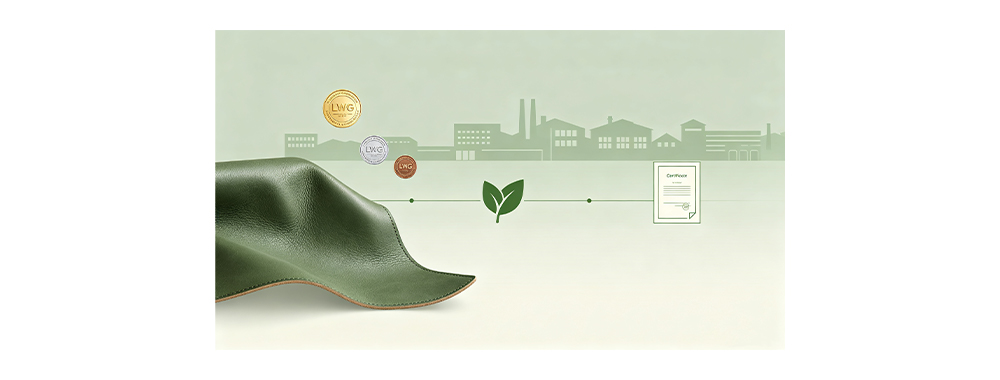
LWG certification (Leather Working Group) means a tannery has passed one of the leather industry's most-recognized independent audits, verifying it meets international standards for environmental protection, chemical management, supply-chain traceability and more.
For B2B buyers sourcing leather bags, it signals compliant, reliable suppliers qualified for access to global markets and effectively mitigates supply-chain risks. Simply put, LWG certification serves as a "responsible production" credential for leather manufacturing.
This is not merely a marketing buzzword; it is a core supplier screening requirement set by international brands and for European and American markets. Brands need to focus not only on product quality but also supply-chain compliance and sustainable development. When evaluating leather-product manufacturers, material compliance should be treated as a key assessment metric.
This article offers a full breakdown of LWG certification from a B2B procurement perspective.
Founded in 2005, the Leather Working Group (LWG) is a non-profit industry coalition jointly launched by international brands and tanneries including Nike, Adidas, IKEA, Timberland, Clarks, and Marks & Spencer. Its core mission is to develop and implement globally unified environmental audit standards for tanneries.
Important note: LWG applies exclusively to genuine animal leather. PU and synthetic leathers fall outside LWG's audit scope; alternative sustainable standards should be referenced for man-made materials. Furthermore, LWG audits factories — not finished goods or individual batches of material. Certification covers upstream players such as tanneries and leather traders, but does not certify finished handbags.
The current Protocol 7.2 uses a 100-point scoring system with four distinct levels, each carrying different implications for procurement strategies:
|
Level |
Score Range |
Meaning for Buyers |
|
Gold |
≥85 |
Top-tier environmental performance. Suited for luxury brands and high-end retailers; excellent supporting material for corporate ESG reporting |
|
Silver |
75-84 |
Meets requirements for most global brands. Acts as the baseline threshold for entry into mainstream supply chains |
|
Bronze |
65-74 |
Basic-level compliance. Increasingly insufficient to satisfy requirements from leading brand clients |
|
Audited |
50-64 |
Audit completed but no medal awarded. Most brands do not recognize this as compliant status; buyers must conduct careful due diligence |
Notes: Tannery certificates are generally valid for 24 months, and trader certificates for 12 months, subject to dates printed on the certificate. Re-audits are mandatory upon expiry. Partnering with Gold- or Silver-rated suppliers indicates you are working with vendors capable of stable long-term performance and continuous improvement, rather than those achieving compliance for one-off audits.
Beyond total score thresholds, every key audit chapter must hit level-specific benchmarks for Gold/Silver/Bronze accreditation. Poor performance in any single critical section cannot be offset by high scores in others and will directly lower the final medal level.
LWG is far more than a routine environmental inspection: it delivers a holistic evaluation of factory operations across roughly 17 audit modules under the current protocol. Every component below impacts supply-chain stability:
Wastewater treatment, air emissions, solid-waste disposal, energy efficiency and carbon emissions. This helps confirm factories can withstand regulatory environmental inspections and avoid production shutdowns that cause supply disruptions.
Verification that factory chemical usage aligns with the ZDHC (Zero Discharge of Hazardous Chemicals) MRSL list, and testing for restricted substances such as hexavalent chromium and formaldehyde. LWG's chemical module cross-references the ZDHC framework. Compliance here directly supports export requirements and mitigates risks of cargo rejection and fines.
Supplementary note: Protocol 7.1 mandates factories implement the ZDHC Level 3 chemical-management system. Holding a standalone ZDHC Level 3 certificate is not sufficient; full process implementation on-site is required.
Traceable origin, type and source location for raw hides and skins. This forms the foundational requirement for complying with the EU Deforestation-free Products Regulation (EUDR) and proving legal raw-material sourcing.
Working hours, wages, occupational health and fire safety. LWG Protocol 7 includes a dedicated Social Audit chapter, though it carries relatively low weighting. LWG accepts pre-existing third-party social-audit outcomes such as BSCI and SMETA to prevent redundant factory audits.
Existence of continuous-improvement mechanisms and regular monitoring. These criteria help buyers gauge supplier operational maturity and assess long-term collaboration potential.
Important caveat: Although often described as a "comprehensive health check" for factories, LWG does not cover all sustainability topics. Animal welfare, deforestation at farm level, and full labour-rights requirements (e.g. freedom of association, collective bargaining) are outside LWG's direct audit scope. Buyers should supplement LWG findings with other standards and due-diligence tools.
For purchasers, an LWG audit report acts as a full operational health check for factories. It enables quick identification of high-risk and poorly managed suppliers and reduces trial-and-error costs.
LWG is rolling out its largest-ever standard overhaul. The new LWG Sustainability System was scheduled for phased roll-out, including modules for the Leather Production Standard, Chain-of-Custody (CoC), deforestation due diligence, and decarbonisation frameworks with factory-level carbon metrics. Carbon emissions and raw-material traceability will shift from bonus criteria to mandatory core audit requirements.
Based on latest public announcements, LWG has postponed the official launch of the full LWG Sustainability System to early 2027. As of September 2026, Protocol 7 remains the active audit protocol, while the new system stays in pilot, consultation and preparation phases. Protocol 7 will not be fully superseded immediately in 2027; the full transition timeline will follow official LWG announcements.
Timeline (updated September 2026):
• 2023-2025: Multiple rounds of public consultation on new standards; pilot audits completed at 15-20 global factories between 2024-2025.
• 2026: Further refinement of the new framework and modules; expanded pilot scope. Official launch delayed; Protocol 7 continues as the valid audit reference.
• Early 2027: Official release of the LWG Sustainability System, followed by a transition period for migration audits.
• Full replacement: To be confirmed via official LWG communications; complete replacement is not expected to occur in 2027.
Implications for Buyers
• Audit requirements for certified factories will keep evolving; certification does not grant permanent validity. When collaborating, always verify certificate expiry dates, re-audit status, and pro-actively enquire about suppliers' migration-audit roadmaps.
• The extended transition window still brings pressure for carbon-data management and raw-material traceability. Suppliers lacking robust data capabilities may face extensive remediation work, which could temporarily affect supply reliability.
• Brand-level requirements for chain-of-custody and deforestation due diligence will cascade down the supply chain.
• Include suppliers' LWG level, certificate validity, audit protocol version, progress toward adopting new standards, and carbon-data management foundations within annual supplier reviews. Prioritise partners proactively preparing for the upcoming new system.
Collaborating with LWG-certified tanneries delivers these practical advantages:
• Market-access security: Many premium international brands make LWG certification a supplier entry requirement. For instance, Coach has publicly targeted sourcing at least 90% of its leather from Silver-level or higher tanneries by 2025; Hugo Boss aims for 100% of leather procurement to meet at least Silver standard by 2027. These represent publicly disclosed corporate targets subject to internal brand policy updates. Confirm clients' latest procurement rules prior to contracting.
• Reduced repetitive factory audits: LWG audits are widely recognised across global brands. One audit can be accepted by multiple stakeholders, cutting audit-related time and expenses.
• Regulatory-risk mitigation: Supports compliance with European and American environmental and chemical regulations including REACH and EUDR, lowering legal exposure and brand-reputation risk.
• Strengthened ESG performance: Integrate LWG into sustainable-procurement programmes to demonstrate supply-chain transparency to clients and investors.
A:LWG certification is issued to tanneries. Finished-goods leather manufacturers cannot obtain tannery-focused LWG certification. Finished-product factories achieve supply-chain compliance by purchasing leather originating from LWG-certified tanneries.
A:Tannery certificates are typically valid for 24 months; trader certificates for 12 months. Re-audit is required upon expiry. Always confirm a certificate is in force before entering procurement partnerships.
A:LWG audits incorporate ZDHC hazardous-chemical-control requirements. Protocol 7.1 mandates factories establish a ZDHC Level 3 chemical-management system.
A:Not exactly. LWG traceability modules deliver foundational prerequisites for EUDR compliance, yet an LWG certificate is not equivalent to formal EUDR compliance proof. Companies must retain full batch-level traceability documentation and complete supply-chain due-diligence procedures to satisfy regulatory obligations.
A:The full new system launch has been pushed to early 2027, extending the transition period while uncertainties persist. Some established tanneries risk downgrade or certificate withdrawal during migration audits if they fail carbon-disclosure and ZDHC Level 3 system requirements, shrinking the pool of available qualified suppliers.
In parallel, customers will request upstream tannery carbon-emission and chemical-management documentation, requiring proactive document collection from suppliers. Track official LWG timelines and request migration-readiness plans from vendors.
A:Fake certificates exist. Do not rely solely on PDF files provided by suppliers. Use the official LWG public database to input factory names and validate certification level, expiry date and audit-protocol version.
A:Yes. Re-audits take place every two years. Non-compliance with updated carbon metrics under new rules may also trigger downgrades. Ratings are not permanent; conduct periodic re-verification for active partnerships.
A:LWG covers only genuine animal-based leather. PU and synthetic alternatives sit outside LWG's audit scope; other sustainability standards apply for man-made materials.
A:Yes. LWG constitutes a factory-system audit; REACH covers substance-level testing of finished products. The two are not interchangeable. While LWG reduces chemical-risk exposure, it does not waive finished-goods testing obligations.
A:Yes. LWG authorises qualified independent third-party bodies to conduct on-site audits. Audits are neither run directly by internal LWG staff nor self-declared by factories.
A:Yes. Distinct certificate types exist for tanneries and leather traders. When sourcing genuine leather raw materials, confirm you are reviewing a tannery certificate: trader certificates are not equivalent to tannery accreditation. Notably, leather trader standards do not issue Gold/Silver/Bronze medals — only pass/fail outcomes. Beware of industry misrepresentation where vendors falsely claim "Silver-level LWG trader status".
A fourth certificate category exists for Commissioning Manufacturers, which are eligible for Gold/Silver/Bronze medals with a 24-month validity; these differ from standard trader certificates. Distinguish medal-bearing certification from separate Chain-of-Custody (CoC) certificates, which serve different purposes. Subcontractor-specific LWG certificates carry only an "Audited" status with no medal awards.
Revisiting our opening question: what exactly is LWG certification?
It serves as a benchmark to evaluate the comprehensive capabilities of leather-goods manufacturers, acts as a passport for brands accessing international markets, and represents a vital tool for procurement teams managing risk and aligning with industry sustainability trends.
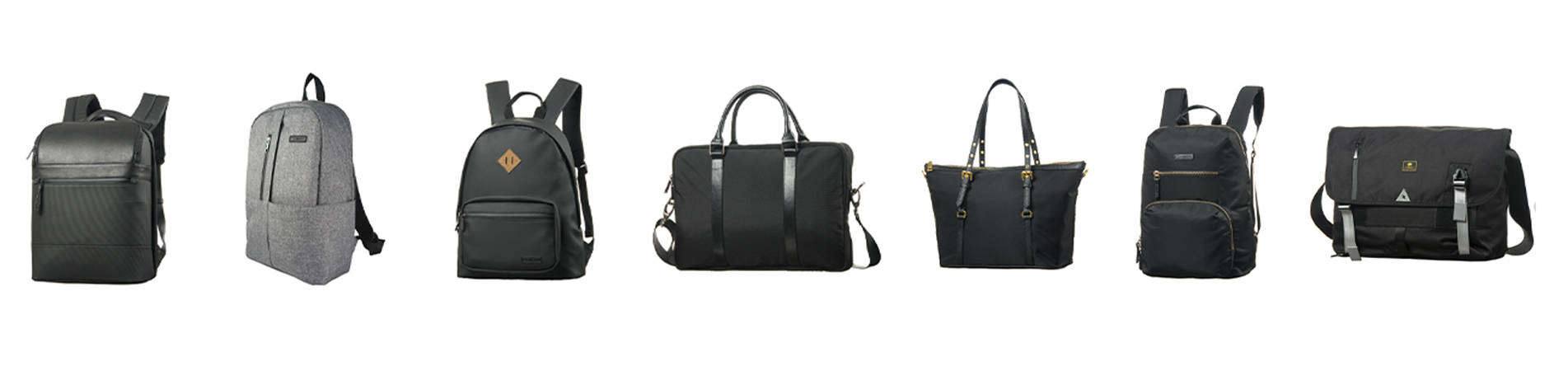
As an OEM leather-goods manufacturer, our facility cannot obtain tannery-specific LWG certification since LWG audits target tanneries rather than finished-goods production sites. Even so, we source leather exclusively from LWG-certified tanneries and preserve full batch-level traceability documentation, enabling our clients to meet EUDR, REACH and other compliance requirements. If you are seeking a leather-goods supplier capable of delivering design execution alongside global compliance, please feel free to contact us.
| Author | ||||||
|
Please Read On, Stay Posted, Subscribe, And We Welcome You To Tell Us What You Think.




Copyright @2024 Synberry Bag & Package Products Co.,Ltd All Rights Reserved.
 Network Supported
Sitemap / Blog / Xml / Privacy Policy