What Features Should a Good Pickleball Bag Have?
Oct 20, 2026
A quality pickleball bag should meet four core standards: a scientifically designed compartment layout, a comfortable carrying system, high-quality craftsmanship, and durable, water-resistant materials. Only when all four elements are combined can a pickleball bag truly be considered a good one.
Table of Contents:
Scientific Compartment Design
Comfortable Carrying System
High-Quality Craftsmanship
Durable, Water-Resistant Materials
Customization Recommendations for Brands
Frequently Asked Questions About Pickleball Bag Customization
Conclusion
1. Scientific Compartment Design
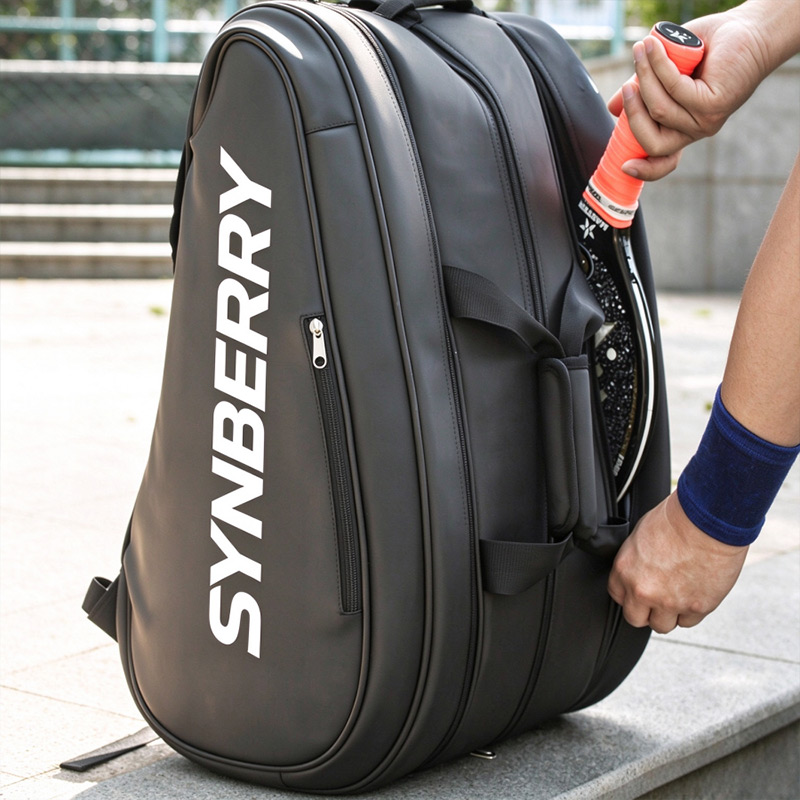
Pickleball paddle faces are primarily made of carbon fiber or fiberglass composite materials, which are susceptible to pressure, scratches, and prolonged exposure to high temperatures and direct sunlight. Therefore, a dedicated paddle compartment is an essential feature of a good pickleball bag.
Specifically, an excellent paddle compartment should have the following features:
Thickened, Insulated Paddle Compartment: The dedicated paddle compartment should feature a thickened EVA or pearl cotton cushioning layer to absorb impacts when the bag is dropped or squeezed. In addition, an aluminum foil thermal insulation lining can effectively resist high outdoor temperatures and help prevent paddle face deformation caused by prolonged exposure to direct sunlight.
Large-Capacity Main Compartment: The main compartment should provide sufficient space to accommodate all the essential gear needed for daily training or competitions, such as clothing, towels, water bottles, and other items.
Quick-Access Ball Pocket: Add a dedicated mesh or elastic compartment inside the main compartment for storing pickleballs. The separate, quick-access ball pocket keeps balls physically separated from clothing, helping maintain the cleanliness and organization of the gear. It also allows players to quickly access spare balls during warm-ups or between matches without having to search through the entire main compartment, improving overall efficiency and user experience.
Separate, Ventilated Shoe Compartment: Isolated from the main compartment, it prevents wet or dirty shoes from soiling paddles and clothing while helping reduce unpleasant odors. This is a key feature that distinguishes a professional pickleball bag from an ordinary gym bag.
Multiple Small Pockets: Designed to store personal items and accessories such as mobile phones, keys, overgrips, protective gear, and towels.
Hidden Valuables Pocket: Features a soft, suede-lined interior to safely store valuables that are susceptible to scratches.
2. Comfortable Carrying System
Pickleball bags commonly come in three carrying styles: backpacks, shoulder/crossbody bags, and convertible bags that can be carried by hand or worn as backpacks.
Backpack: Ideal for carrying multiple paddles and a full set of gear, its key features lie in the design of the shoulder straps and back panel. The shoulder straps of a high-quality backpack should be wide and thick, filled with high-density foam, and covered with breathable mesh fabric to distribute pressure across the shoulders and promote airflow, preventing excessive heat buildup and pressure marks during extended wear. The back panel should incorporate an EVA or PE pearl cotton support layer to prevent it from deforming or collapsing under heavy loads. It should also conform to the natural curvature of the spine, providing stable and reliable support.
Shoulder Bags or Crossbody Bags: These bags prioritize lightweight convenience and flexibility, making them ideal for short training sessions or situations where only a small amount of gear is needed. The shoulder strap should be sufficiently wide to prevent slipping, while the shoulder pad should incorporate a cushioning layer to reduce the strain of carrying weight on one shoulder. An adjustable shoulder strap allows users of different heights to find a comfortable fit.
Convertible Tote and Backpack: For users who value versatility, a convertible tote and backpack offers greater flexibility. This type of bag typically features a reinforced top handle for convenient carrying over short distances or placing the bag in a vehicle, as well as a padded side handle designed to reduce pressure on the hand and prevent discomfort when carrying the bag.
When converted into backpack mode, the concealed shoulder straps should be easy to pull out and securely fasten, ensuring a seamless carrying experience in both configurations. Regardless of the style chosen, the ultimate goal of the carrying system is to ensure that players feel comfortable and at ease on their way to and from the court.
3. High-Quality Craftsmanship
Craftsmanship details directly determine the service life and overall look and feel of a pickleball bag.
Stitching: The stitching must be strong and durable, with consistent stitch spacing and neat, even seams. Key stress points, such as shoulder strap attachment points, handle bases, and zipper ends, should be reinforced with double or even triple stitching, combined with bar-tack reinforcement to improve tear resistance and prevent seams from splitting or breaking under prolonged heavy loads.
Hardware: The choice of hardware is crucial. Zippers should be smooth, durable, and offer a certain level of water resistance, preferably from reputable brands such as YKK or SBS. Zipper pulls should be designed for easy gripping and operation, even when wearing sports gloves.
Buckles: Buckles should undergo fatigue testing to ensure they resist cracking or deformation even after repeated fastening and release. In addition, fabric edges should be finished neatly, with no loose threads, and the bag should maintain a structured, well-defined shape without easily collapsing, even when empty. These details reflect professional quality and attention to detail.
4. Durable, Water-Resistant Materials
Pickleball is often played outdoors, where bags may be exposed to sudden rain showers or morning dew on the court. Therefore, the water resistance of the fabric serves as the first line of defense in protecting the gear inside.
4.1 Main Fabric: Nylon vs. Polyester
A high-quality pickleball bag should be made from high-density nylon (such as 600D or higher) or polyester fabric. These materials offer excellent abrasion resistance and tear resistance, along with good water-repellent properties.
Nylon: When comparing these two common materials, nylon stands out for its higher strength-to-weight ratio and excellent abrasion resistance, making it a preferred choice for premium pickleball bags. It has a smooth surface and a soft feel, but comes at a relatively higher cost.
Polyester: Polyester offers better UV resistance and color retention, making it less prone to fading or degradation after prolonged exposure to direct sunlight. It is also more affordable, making it a cost-effective choice.
4.2 Waterproof Coatings
A high-quality fabric base alone is not sufficient to withstand harsh weather conditions. The surface waterproofing treatment is the key factor that determines a bag's water-repellent performance.
Most professional pickleball bags on the market today use one of three main treatments: DWR (Durable Water Repellent) coating, PU coating, or TPU coating.
DWR Water Repellency: DWR coating creates a lotus-leaf effect on the surface of the bag, causing water droplets to bead up and roll off quickly rather than penetrate the fabric. This effectively prevents rainwater from soaking the gear inside.
PU Waterproof Coating: PU coating is typically applied to the inner side of the fabric, forming a dense waterproof membrane. It not only prevents external moisture from penetrating but also enhances the fabric's overall structure and tear resistance.
TPU Waterproof Coating: As a thermoplastic polyurethane elastomer, TPU coating is typically laminated onto the inner side of the fabric as a thin film or incorporated as a separate layer. Compared with PU coating, TPU offers superior hydrolysis resistance and low-temperature flexibility. Even in cold and humid environments, it is less prone to degradation, hardening, or cracking, helping maintain the bag's waterproof performance over long-term use.
5. Customization Recommendations for Brands
If you are planning to develop a pickleball bag under your own brand, the following recommendations across three key areas can help you strike the right balance between product performance, cost, and target audience.
5.1 Main Fabric Selection Recommendations
Fabric determines a pickleball bag's look and feel, durability, and pricing potential. The following table provides fabric selection recommendations based on product positioning.
Fabric Option
Common Specifications
Strength / Abrasion Resistance
UV Resistance
Cost
Recommended Positioning
Polyester
600D / 900D
★★★☆
★★★★☆ (fade-resistant)
Moderate
Value-oriented models, entry-level models, and products for prolonged outdoor sun exposure
Nylon
600D / 1680D ballistic nylon
★★★★★ (strong and lightweight)
★★★ (UV treatment recommended)
Medium to high
Mid-to-high-end models and bags for professional players
Nylon + Ripstop / Jacquard
Checkered nylon, honeycomb texture
★★★★★
★★★
High
Premium models and designer brands
Composite Mesh Fabric (PVC/EVA)
500D–1000D
★★★★☆
★★★☆
Moderate
Enhanced waterproof models and bags for beach or multi-purpose use
Key Selection Considerations:
For high-volume sales models, prioritize 600D polyester. It offers manageable costs and good colorfastness, making it a popular choice for mainstream, entry-level products.
For mid-to-high-end models, consider 1000D or 1680D ballistic nylon. Its high strength and good water resistance make it suitable for the mid-to-high-end market.
Eco-friendly options: Consider recycled nylon, such as ECONYL®, or recycled polyester (RPET), and support internationally recognized certifications such as GRS to meet the growing demand for sustainable products in European and North American markets.
5.2 Capacity Selection Recommendations
Bigger is not always better when it comes to capacity. The ideal size should match the target users' playing scenarios and carrying habits. The following table provides capacity design recommendations for OEM pickleball bag development.
Capacity Category
Paddle Capacity
Typical Configuration
Target Audience
Reference Dimensions (L × W × H)
Lightweight Model
1–2 paddles
Main compartment + ball pocket + water bottle holder; usually no shoe compartment
Casual players and people who combine walking with playing pickleball
Approx. 45 × 20 × 25 cm
Standard Model (Recommended)
2–4 paddles
Padded paddle compartment + main compartment + separate shoe compartment + ball pocket + small-item compartments
Core club members and regular doubles players
Approx. 50 × 25 × 32 cm
Professional Large-Capacity Model
4–6 paddles
Padded paddle compartment + large main compartment + separate shoe compartment + ball pocket + waterproof pouch
Professional players and coaches
Approx. 55 × 30 × 38 cm
Travel / Team Model
6 or more paddles
Rolling suitcase-style bag or extra-large backpack with external attachment systems
Team bulk purchases and players who travel frequently
Approx. 60 × 35 × 45 cm
Key Selection Considerations:
The standard model is the sweet spot. A bag that holds 2–4 paddles can serve a broad range of players. Brands developing a new pickleball bag product line should consider making this capacity their flagship SKU
Lightweight models are ideal for customer acquisition or promotional giveaways. Their simple construction and lower cost make them suitable as companion bags for entry-level sets or as commemorative gifts for club events, lowering the barrier to entry for new players.
Professional large-capacity models should prioritize storage efficiency rather than simply adding more space. To address the challenge of organizing extensive equipment carried by coaches and professional players, consider removable dividers or modular inner compartments. These features allow users to accommodate different combinations of paddles and clothing while keeping the interior organized.
Travel / team models should prioritize travel-friendly features. In addition to extra-large capacity, they should include a standard luggage strap and abrasion-resistant protective feet. These features help secure the pickleball bag to a suitcase during airport transfers and long-distance travel while reducing wear on the bottom of the bag
6. FAQ: Frequently Asked Questions About Pickleball Bag Customization
Q1: What is the difference between a pickleball bag and a tennis bag? Can they be used interchangeably?
They can be used interchangeably on a temporary basis, but it is not recommended. Pickleball paddles (approximately 40 cm long) are shorter than tennis rackets, so tennis racket compartments may leave too much empty space, allowing paddles to shift around and collide with other items. Pickleball bags also typically feature dedicated ball pockets, since hard plastic pickleballs can be damaged by excessive pressure, as well as shoe compartments and more small-item storage sections. If you play only pickleball, a dedicated pickleball bag offers a significantly better user experience.
Q2: How can I tell a bag's waterproof rating? Does water repellency mean it is waterproof?
No. Water repellency provided by a DWR coating is generally sufficient for light rain and splashes, but zipper areas can still allow water to seep in. For more comprehensive waterproof protection, the bag needs a combination of PU/TPU-coated fabric or laminated waterproof fabric and waterproof zippers, such as those in YKK's waterproof zipper series. When shopping, check whether the product specifications mention both fabric coating and waterproof zippers.
Q3: Why does a pickleball paddle compartment need thermal insulation? Can summer heat really damage a paddle?
Yes. Pickleball paddles made with carbon fiber or fiberglass faces and polypropylene honeycomb cores may experience face softening, delamination, or changes in playing feel after prolonged exposure to high temperatures and direct sunlight. An aluminum foil thermal insulation lining can significantly reduce the temperature inside the bag, making it one of the key features that distinguishes a professional pickleball bag from a budget model.
Q4: What is the typical minimum order quantity (MOQ) and lead time for custom pickleball bags?
SYNBERRY's standard MOQ is approximately 500 pieces. The sampling lead time depends on the complexity of the design and is typically 2–3 weeks. Mass production lead time varies according to order quantity and manufacturing complexity. Additional time should be allowed for special processes, such as full-surface printing, reflective strips, and custom-molded buckles.
Q5: Should I choose nylon or polyester for a pickleball bag? Which is more durable?
Both materials are durable, but each offers different advantages. Nylon provides greater strength and a better hand feel, making it suitable for mid-to-high-end products. Polyester offers better UV resistance, superior color retention, and a lower price, making it ideal for cost-effective models intended for prolonged outdoor sun exposure. Choose nylon if your budget allows; choose polyester if value for money is the priority.
7. Conclusion
Pickleball is experiencing explosive growth in global participation, and pickleball bags are evolving from accessory equipment into a specialized product category. For sports bag brands, this represents not only an opportunity to enter an emerging market but also a critical window to establish professional brand recognition through more refined product development.
An excellent pickleball bag should be more than a collection of storage compartments. It should reflect a deep understanding of end-user needs and deliver a thoughtful response to their expectations. From thermal insulation technology that protects expensive paddles, to compartment layouts that improve access efficiency, to weather-resistant materials designed for outdoor conditions, every detail demonstrates respect for the player's sporting experience.
This article has been written from the perspective of a pickleball bag manufacturer, with the aim of providing brands developing pickleball bag product lines with a comprehensive reference guide, from understanding customer needs to bringing products into production.
Author





 Network Supported