2026 Fashion Handbag Leather Options Manufacturing Guide
Jul 21, 2026
In the field of OEM & ODM foreign custom fashion handbags, material selection is the core factor that determines product texture, durability, pricing system and brand tier. Compared with silhouette and craftsmanship details, fabric material directly shapes consumers’ first tactile impression and long-term product reputation, and it is also a key driver for brands to build product differentiation.
As Synberry, a handbag manufacturer with 3 decades of experience serving mid-to-high-end foreign custom bag orders, we have collaborated with fashion brands and designer studios across more than 30 countries worldwide. We have accumulated extensive expertise in material selection, process implementation, compliance testing and mass production.
Combining the latest 2026 industry trends, this guide systematically breaks down the pros, cons, applicable scenarios and pitfalls of three mainstream handbag leather materials from four dimensions: performance, design, environmental sustainability and brand positioning. It delivers a ready-to-use material selection standard for global buyers.
Table of Contents :
Analysis of Leather Material Categories
2026 Material Selection Recommendations for Leather Handbags
Three Core Material Trends for Fashion Handbags in 2026
Frequently Asked Questions
Conclusion
I. Analysis of Leather Material Categories
1. Natural Leather: Timeless Classic for High-End Handbags
Boasting one-of-a-kind natural grain, soft warm touch and patina texture that develops over time, natural leather remains the premier material for luxury and entry-luxury signature handbags. Its natural fiber structure delivers breathability, toughness and unique aging texture that cannot be replicated by any synthetic alternatives.
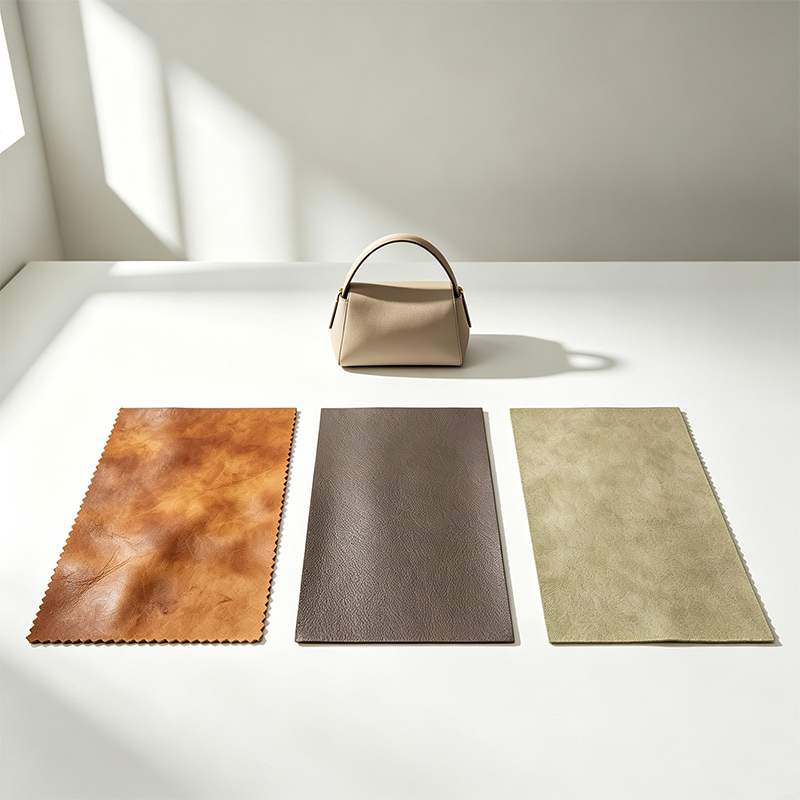
Based on segmented market demands in 2026, natural leather is divided into three subcategories tailored for different tiers of premium product lines:
1.1 Full-Grain Leather – Top-Tier Luxury Standard
Full-grain leather retains the complete top fiber layer of raw hide without excessive sanding or thick coating coverage. It features dimensional natural grain, superior breathability, outstanding crease resistance and abrasion resistance. With prolonged use, it develops a translucent, delicate natural patina that elevates its aesthetic over time. It is the exclusive material for signature styles of luxury houses including Hermès and Loewe, positioning products as high-value, timeless and collectible.
1.2 Corrected-Grain Leather – Cost-Effective Mid-to-High-End Option
Raw hide surface imperfections are refined via precision sanding and uniform coating, resulting in consistent appearance and stable quality across production batches. Though some natural grain texture is diminished, material yield is significantly improved, striking a balance between quality and cost. It stands as the dominant material for 2026 mid-to-high entry-luxury brands, retail bestsellers and daily commute luxury bags.
1.3 Split Leather – Entry-Level Luxury Transitional Material
Sourced from the lower fiber layer of raw hide, split leather requires film lamination or coating reinforcement. It carries low costs and flexible molding capacity, yet suffers weaker toughness, breathability and durability. It is only suitable for entry-level luxury, short-cycle trend items and brand trial collections, ideal for emerging brands aiming to minimize initial development expenses.
2. Microfiber PU Leather: Core Material for Fast Fashion & Mid-Tier Lines in 2026
Polyurethane (PU) synthetic leather is the most widely mass-produced handbag material globally, and the primary choice for mid-tier trend collections, fast fashion and youthful designer series in 2026. Versus natural leather, PU offers stable costs, diverse colorways and uniform surface quality, perfectly matching quarterly trend rotation and large-scale cross-border shipment demands.
High-density microfiber PU leather has become the new industry benchmark, outperforming low-grade conventional PU with the following key advantages:
Performance: Built on ultra-fine fiber substrates, this material delivers stronger coating adhesion, drastically enhanced crack resistance, anti-aging performance and crease tolerance. Its service life closely matches mid-grade genuine leather, fully resolving traditional PU pain points such as peeling, delamination and brittleness.
Design: Microfiber PU boasts exceptional molding flexibility, customizable finishes including matte, glossy, pearlescent, metallic, gradient and suede textures, plus a full spectrum of color options. It quickly aligns with global fashion trends and provides designers abundant creative freedom.
Compliance & Environmental Standards: Cross-border regulatory oversight tightens in 2026. The EU REACH Regulation enforces strict limits on DMF solvent residues in PU, while US CPSC restricts phthalate content. Non-compliant goods face customs detention and platform delisting. Synberry conducts third-party compliance testing for all incoming PU material batches, delivering market-specific compliant material solutions to guarantee smooth overseas sales.
3. Plant-Based Sustainable Leather: Core Direction for Circular Fashion
Crafted from agricultural waste and natural plant fibers, plant-based sustainable leather eliminates the resource depletion drawbacks of traditional leather. With low-carbon, recyclable and eco-friendly attributes, it serves as the primary material for ESG-focused brands, environmental pioneers and premium niche designer collections.
Synberry incorporates four mainstream plant-based leather types into its regular material library, fully supporting sustainable custom handbag development:
3.1 Piñatex (Pineapple Leather)
Manufactured from discarded pineapple leaf fibers, it requires no extra farmland or water resources, enabling agricultural waste upcycling. It features inherent matte fibrous texture, good breathability and a minimalist natural aesthetic, ideal for artistic, outdoor eco-luxury handbags.
3.2 Desserto (Cactus Leather)
Made from natural cactus leaves, its production consumes zero irrigation water and generates zero pollution with strong carbon sequestration capacity. It delivers soft, delicate hand feel, high toughness and abrasion resistance, with texture nearly identical to calfskin. It is the most commercially mature plant-based material, perfectly suited for premium entry-luxury lines.
3.3 Apple Leather
Produced from waste apple pomace after juice extraction, each meter of this material cuts 12kg of carbon dioxide emissions, offering powerful eco-brand storytelling value. Moderate hardness and excellent embossing & printing performance deliver flexible molding, fitting youthful, trendy and minimalist sustainable fashion bags.
3.4 Mylo (Mushroom Mycelium Leather)
Grown from lab-cultivated mushroom mycelium, it features ultra-soft tactile feel and superior stretchability, replicating premium suede texture for exclusive niche aesthetics. It is mainly used for designer limited editions and high-end niche luxury collections.
Synberry Reminder: While plant-based leather excels in sustainability, waterproofing and long-term abrasion resistance for some variants remain under iterative improvement. We match materials precisely to product usage scenarios and advise brands to standardize product labeling and care instructions to establish reasonable consumer expectations and avoid after-sales disputes.
II. 2026 Leather Handbag Material Selection Recommendations
The comparison table below evaluates natural leather, premium PU leather and plant-based leather across five dimensions: performance, design, sustainability, compliance complexity and brand positioning, delivering actionable insights for product development:
Comparison Dimension
Natural Leather
High-Grade PU Leather
Plant-Based Leather
Performance
Excellent, develops unique patina over years
Good; microfiber PU performance nears genuine leather
Ongoing optimization; partial performance metrics still improving
Design Flexibility
Moderate; constrained by natural grain variation
Extremely high; unlimited color & texture customization
Moderate, leans toward natural minimalist styling
Sustainability Credentials
Medium; relies on compliant tanning processes
Low, no eco-label eligibility
Exceptional, standout sustainable selling point
Compliance Complexity
Medium, focuses on tanning certification
High, strict chemical control requirements
Low, minimal cross-border compliance risks
Brand Positioning
High-end classic & value-retaining luxury lines
Fast fashion & mid-tier trend collections
Eco-conscious pioneers & niche designer brands
III. Three Core Material Trends for 2026 Fashion Handbags
Drawing on Synberry’s material R&D data and global fashion industry insights, three definitive material trends will shape 2026 handbag design, serving as key differentiation tools for brands:
1. Hybrid Multi-Material Construction
Single materials rarely balance aesthetics, functionality, wear resistance and cost simultaneously, so composite multi-material design has become the standard for best-selling styles. The mainstream industry formula: plant-based leather for bag bodies to elevate eco-brand identity, wear-resistant microfiber PU for stress points and bag bases to boost practicality.
RPET lining can also be a strong option to enhance the handbag's overall sustainability.
2. Smart Functional Materials
Fashion handbags integrate deeply with technical functionality. RFID signal blocking (shielding) lining, thermal insulation lining and antibacterial fabrics emerge as core upgrades for functional fashion bags in 2026. Transforming handbags from purely decorative accessories into multi-purpose items with protection, comfort and utility, they cater to diverse daily scenarios for younger consumers.
3. Transparent Supply Chains & Standardized Certifications
Overseas consumers and e-commerce platforms raise ever-higher requirements for material traceability, eco-friendly manufacturing and compliance certificates. Products fully certified with GRS, REACH and other standards gain greater consumer trust, higher platform approval rates and wider premium margins. Transparent, compliant supply chains have become core competitive advantages for brands expanding overseas markets.
IV. Frequently Asked Questions (FAQ)
Q1: Can PU leather be recycled?
A: Current technology does not support recycling the PU coating layer, though the base fabric can be made of 100% rPET. The overall recyclable proportion of PU leather sits between 40% and 58%, hence the term "rPET PU" widely used for recycled PU variants.
Q2: What is the durability gap between microfiber PU and genuine leather?
A: With 2026 mass production technology, high-density premium microfiber PU delivers durability nearly equivalent to low-to-mid tier natural leather. Its ultra-fine fiber substrate drastically improves coating adhesion, crack resistance and crease tolerance, eliminating core flaws of traditional PU such as peeling, delamination and brittleness. However, fundamental differences remain versus premium natural leather in breathability, patina aging texture and long-term resale value retention.
Q3: What compliance standards must handbag materials meet for export to Europe and North America?
A: Three core compliance requirements apply:
1.EU REACH Regulation limits DMF solvent residues in PU; US CPSC enforces phthalate content restrictions.
2.Natural leather is recommended to source from tanneries with LWG certification.
3.Recycled materials require supporting GRS certification.
Q4: What traceability certificates are available for plant-based leather?
A: While plant-based leather supports traceability, there is no unified global transaction certification system. Traceability is verified via supplier batch test reports, biobased content certification, LCA (Life Cycle Assessment) reports, and official licensing agreements between brands and material suppliers (brands collaborating with Piñatex, Desserto and other material makers are maintained on official authorized partner rosters).
Q5: Do plant-based leathers like pineapple and cactus leather deliver sufficient daily durability?
A: Performance meets daily use requirements:
Commercially mature cactus leather offers abrasion resistance and toughness comparable to mid-grade genuine leather, fully suitable for daily handheld bags.
Pineapple leather and apple leather have slightly lower overall wear resistance, better suited for low-friction styles such as crossbody bags and tote bags with minimal frequent surface contact.
Q6: How to maintain plant-based leather handbags daily?
A: Plant-based leather requires slightly more careful maintenance than standard PU:
Avoid prolonged exposure to rain or submersion (waterproofing performance for some variants is still being optimized). Wipe dirt gently with a slightly damp soft cloth; do not use alcohol or strong cleaning agents.
Regularly buff with specialized leather conditioner to preserve original texture.
Q7: How does material selection impact handbag production costs and pricing frameworks?
A: Material directly shapes cost structures and premium potential:
Natural leather carries high, volatile raw material costs but enables premium pricing positioning.
Premium PU has moderate, stable costs, ideal for large-batch mass production with controlled budgets.
Plant-based leather sits at mid-to-high cost range, yet delivers strong eco-brand storytelling that supports larger retail premiums.
Recycled materials with GRS certification qualify for policy incentives and resonate with eco-conscious consumers, supporting mid-to-high price points for mass sustainable product lines.
Q8: Which material carries the lowest risk for new brands launching their first collection?
A: New brands trialing their first product line should prioritize high-density microfiber PU:
Costs are stable and controllable, with mature manufacturing processes for fast delivery, plus extensive design flexibility to align with seasonal trends.
Robust compliance control systems minimize cross-border regulatory risks, effectively cutting trial-and-error development expenses for first-time launches.
Q9: Aside from plant-based leather, what other options exist for sustainable-positioned product lines?
A: Recycled PU, recycled RPET lining and other upcycled materials are cost-effective alternatives. These materials feature mature supply chains, stable performance and lower costs than niche plant-based leather, making them easier to develop widely accepted mass-market sustainable collections.
V. Conclusion
2026 fashion handbag material selection is no longer a simple cost trade-off, but a comprehensive balance of brand positioning, aesthetic design, practical functionality, cross-border compliance and environmental value. Natural leather builds timeless luxury appeal, microfiber PU powers scalable fast fashion, plant-based leather reinforces sustainable brand identity, and recycled materials enable accessible eco-friendly mass-market products.
Precise material matching empowers brands to control costs, mitigate cross-border compliance risks, strengthen product differentiation and boost retail premium margins. Backed by a mature global material supply chain, rigorous foreign trade quality control systems and professional custom manufacturing services, Synberry delivers end-to-end solutions for global fashion brands and independent designers – covering material consultation, sample development, mass production and compliant shipment – acting as a stable long-term manufacturing partner for overseas brands.
Author





 Network Supported