
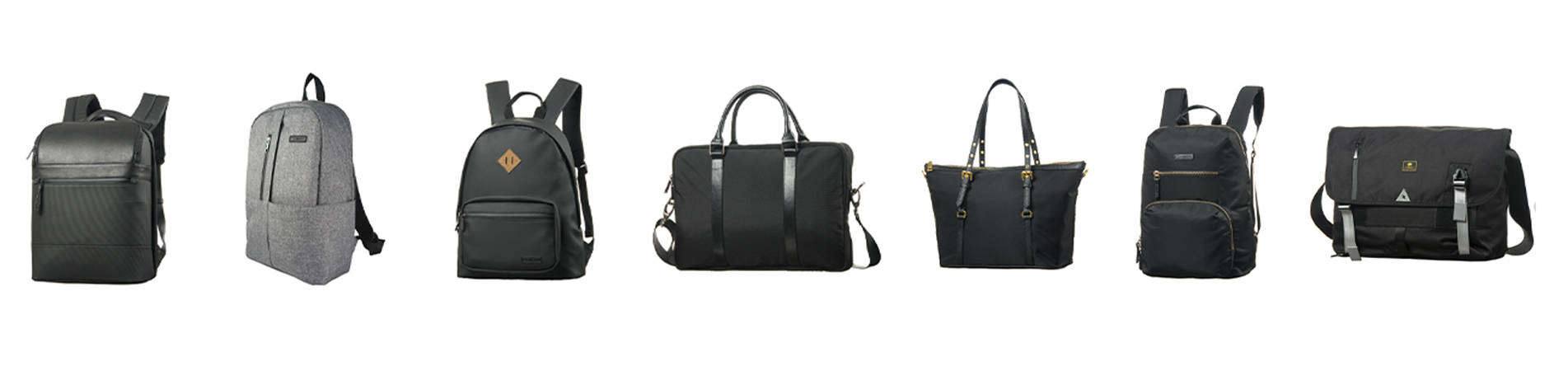
A sourcing relocation perspective grounded in Bureau Veritas' 470K+ quality data points and 30 years of supply-chain execution
Bureau Veritas' latest supply-chain quality white paper reveals a historic shift underway: between 2024 and 2025, Vietnam overtook China in U.S. softlines import share, while Cambodia, Bangladesh, and other hubs are rapidly absorbing orders. For procurement leaders, "China Plus One" has already become "China Plus Many."
Yet the report sounds a sharp warning. Across 470,000+ proprietary quality-inspection data points covering 11 sourcing countries, expansion hubs show a weighted pass rate of only 86%, a seemingly modest 3-percentage-point gap behind China's 89%. Beneath the surface, however, the iceberg tells a different story:
This means shifting a 10-million-unit order to a typical expansion hub generates more than 100,000 extra workmanship defects. For bag brands, this is not merely a statistic—it is a cascade of rework costs, delivery delays, customer complaints, and brand-reputation risk.
The question is no longer "whether to move," but "who owns quality after the move."
BV rates softlines—apparel, bags, and textiles—as the most mature category for alternative sourcing, awarding it top-tier readiness. That explains the flood of brands turning to Vietnam and Cambodia for bag capacity.
But category readiness does not equal your supplier readiness.
The report pinpoints four structural root causes behind quality shortfalls in expansion hubs:
1.Weak quality culture — Management and workers lack a collective quality mindset
2.Insufficient leadership bandwidth — Scarce mid-to-senior local managers cannot scale quality control
3.Shallow talent depth — Far fewer skilled technicians and experienced QC personnel than in China
4.Raw-material volatility — Immature local supply chains create batch-to-batch instability
These four gaps are precisely why most brands "step on a rake" in Cambodia. Many factories grow order volume faster than they build capability, falling into a dangerous loop where output rises while pass rates fall.
We operate a wholly owned manufacturing facility in Cambodia, not an outsourced partnership. From day one, we made a decision that industry peers considered counter-intuitive:
Instead of starting with simple styles, we directly onboarded the highest-complexity products—bags requiring more than 300 individual operations.
Why? Because three decades of production management have taught us this: Quality capability does not grow organically from "easy to hard." It is forged by forcing the entire organization—through systematic, high-difficulty training—to build standards, habits, and muscle memory.
It is the equivalent of training a special-operations unit from day one.
Specifically, this "reverse training" methodology closes the four gaps BV identifies:
| BV's Four Gaps | Our Targeted Countermeasure |
| Quality culture | Transplanted our 30-year quality system, SOPs, and "right-first-time" culture intact to Cambodia, rather than relying on local legacy habits |
| Leadership bandwidth | Under an owned-factory model, core management combines seasoned Chinese leadership with local backbone talent, ensuring decision chains and quality standards remain uncompromised |
| Talent depth | A 300-step complex bag is the best "boot camp" in itself. Workers master fine workmanship rapidly under high-difficulty training; QC teams develop sharp judgment by inspecting complex defect scenarios |
| Raw-material volatility | Leveraging 30 years of supply-chain resources, we source critical raw materials through proven channels, minimizing batch-variation risk from immature local procurement |
BV's data is an honest portrait of industry averages. Our practice proves one thing: Averages do not dictate individual ceilings.
Through systematic build-out and sustained operations, our Cambodia facility now delivers overall quality performance on par with our China plants. This is not a slogan. It is validated by the same quality standards, the same client audits, and the same complex-product orders over an extended track record.
For brands and buyers seeking reliable Cambodia capacity, this means:
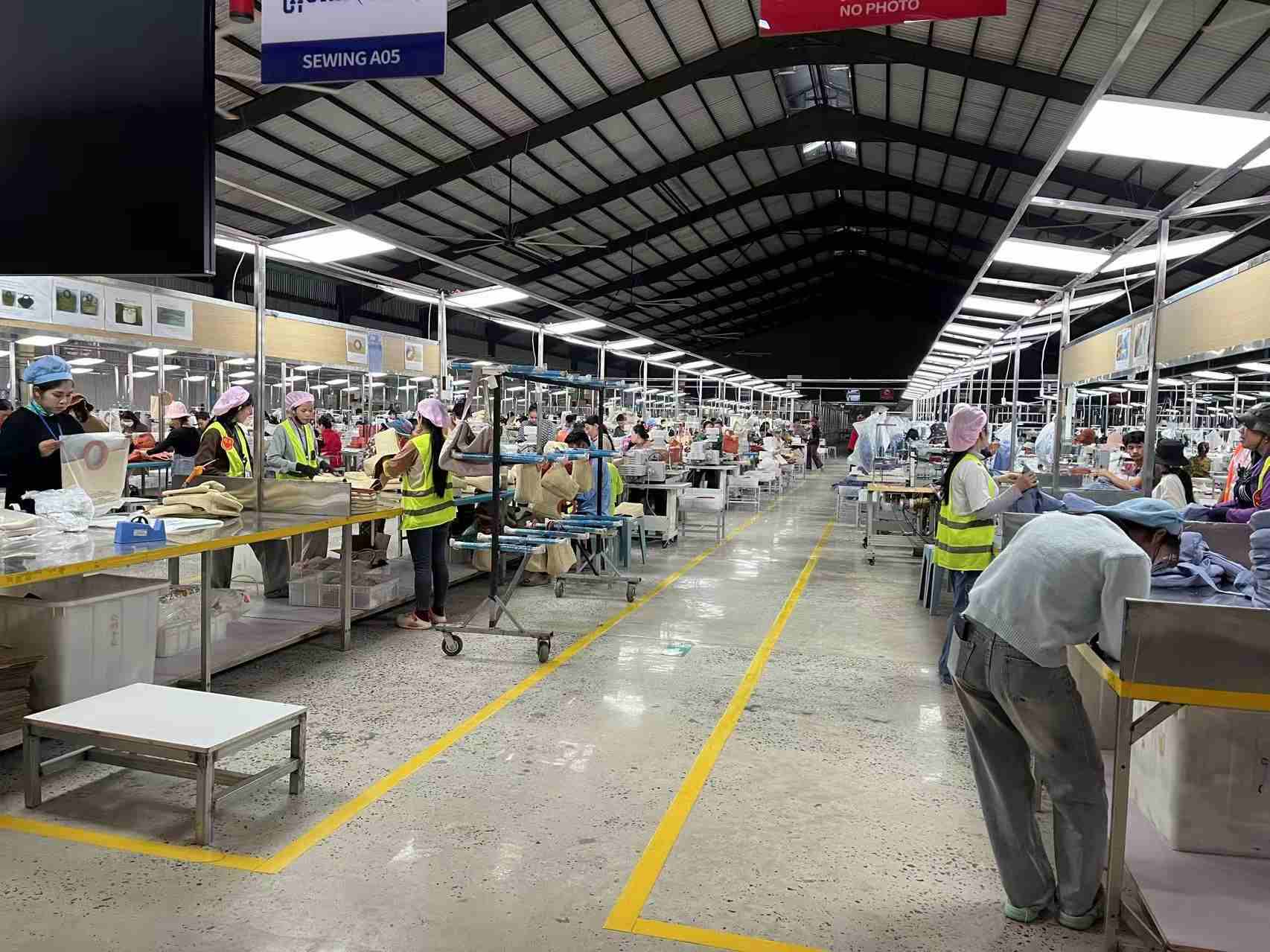
Synberry Production Line
When summarizing the five traits of high-performing brands, the BV report notes: "Successful brands do not simply redirect compliance to a new geography. They rebuild it."
We agree entirely. The real challenge of sourcing relocation has never been finding a cheaper factory; it is redrawing the line of quality ownership—clarifying who owns raw materials, who owns workmanship, and who owns final delivery.
As a vertically integrated manufacturer with China headquarters + Cambodia owned factory, we offer clients:
1.Single accountability — From design confirmation, material purchasing, manufacturing to export customs, the entire chain is managed internally, eliminating finger-pointing gray zones
2.Traceable quality nodes — Every complex operation is documented, standardized, and double-checked
3.Proven capacity flexibility — From 300+ step high-complexity styles to stable baseline production
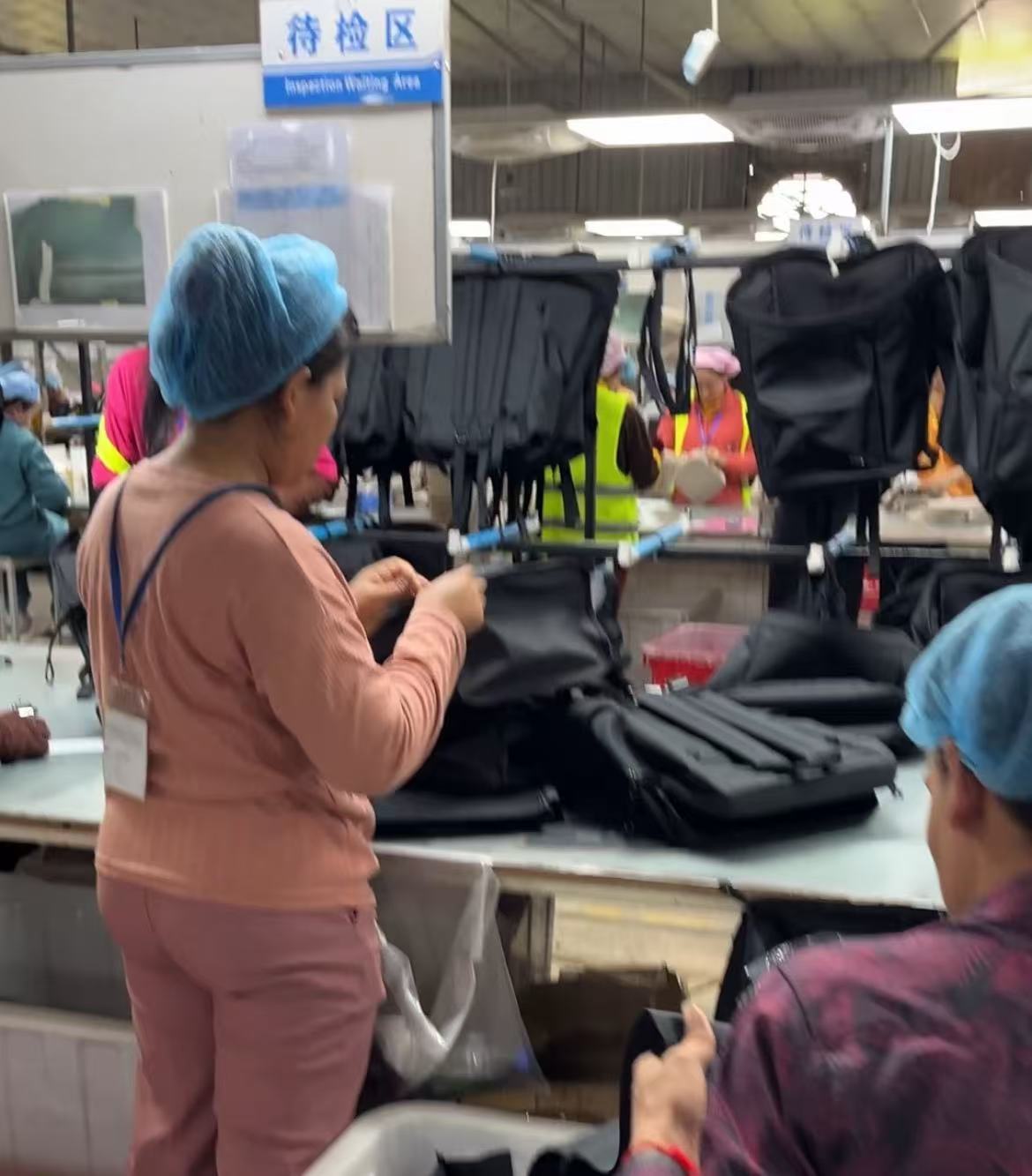
QA inspection in Synberry Bag
The global sourcing map has been redrawn, yet the Bureau Veritas report reminds us: A redrawn map does not automatically carry capability with it.
For bag brands, Cambodia is a promising sourcing option—provided your partner has already converted "capacity" into "capability" on the ground.
With 30 years of experience, the control of an owned factory, and a hard-nosed methodology of "training teams with the toughest products," we have completed that conversion.
If you are evaluating Cambodia supply chains or concerned about the quality risks behind "moving out of China," contact us to arrange a factory audit or sample validation. Let the data speak, and let the floor prove it.
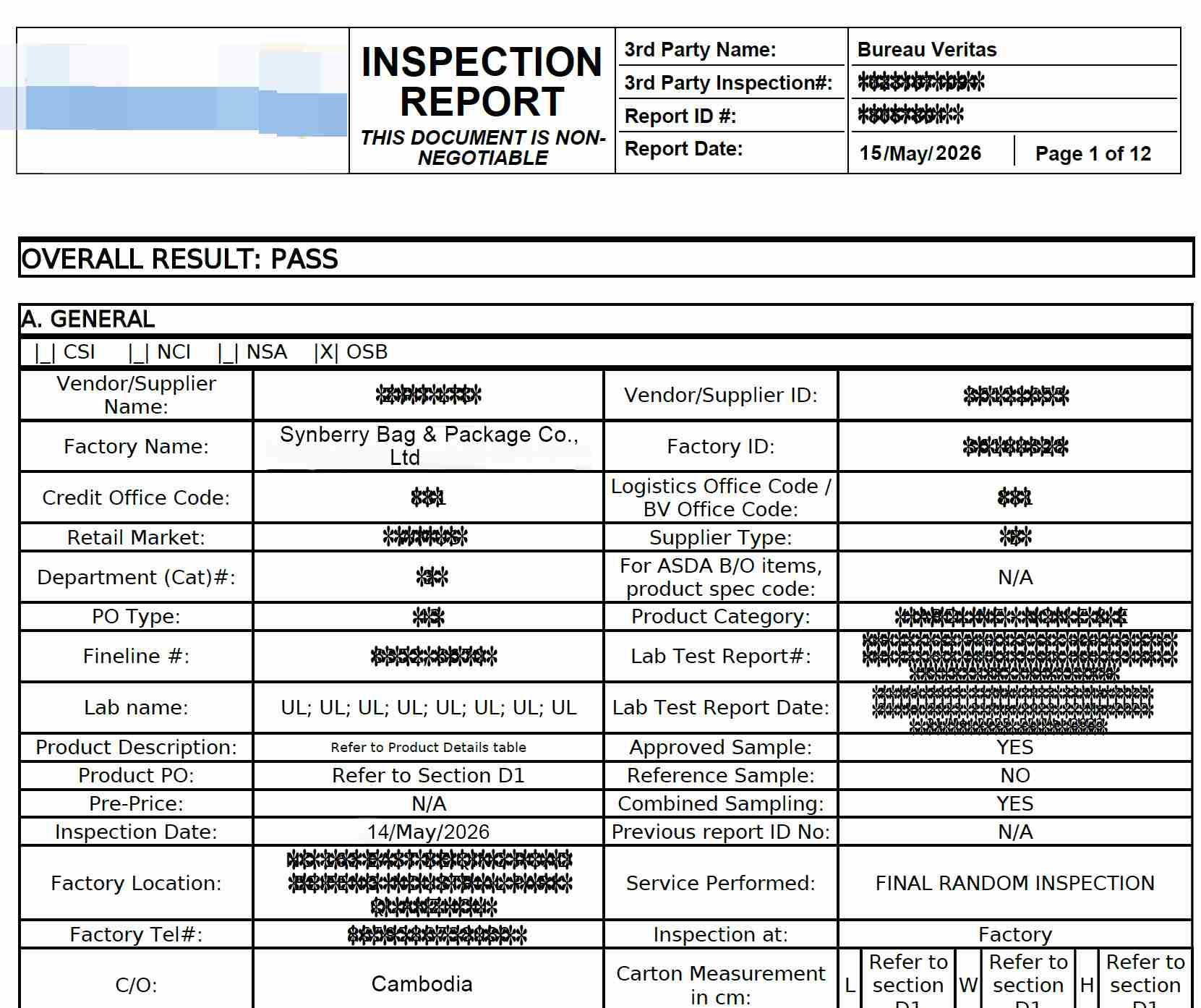
Industry data in this article is cited from Bureau Veritas CPS report: "The sourcing map has been redrawn. Here's the clarity to navigate it."
| Author | ||||||
|
Please Read On, Stay Posted, Subscribe, And We Welcome You To Tell Us What You Think.




Copyright @2024 Synberry Bag & Package Products Co.,Ltd All Rights Reserved.
 Network Supported
Sitemap / Blog / Xml / Privacy Policy