What Are the Differences Between Cooler Bags and Insulated Lunch Bags?
May 26, 2026
I. Definitions of Cooler Bags and Insulated Lunch Bags
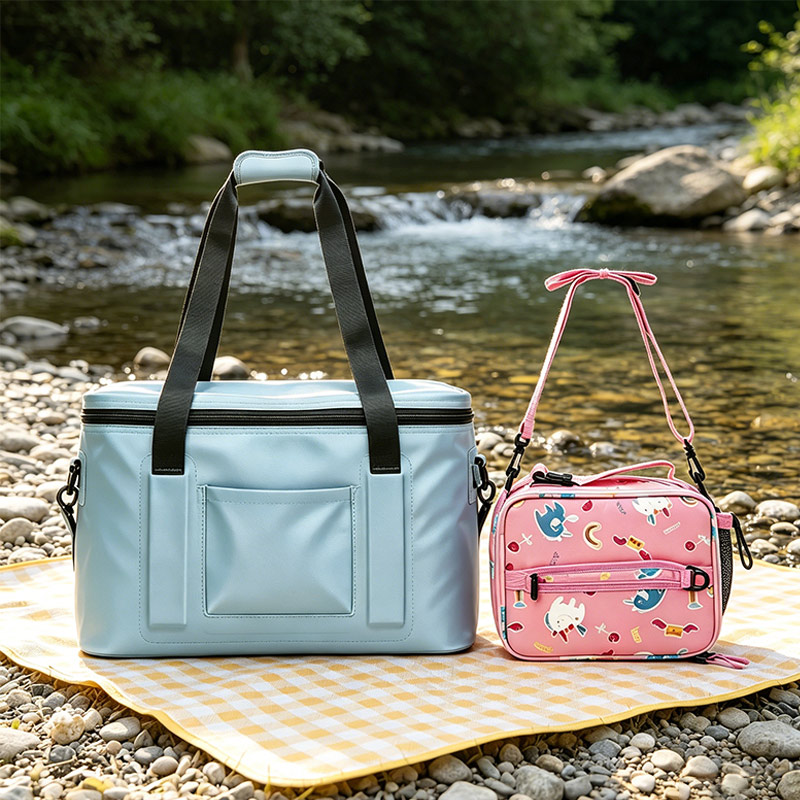
Cooler Bag (also known as cool bag or ice bag) is a portable thermal container designed to keep food and beverages cold (or hot) for extended periods—typically 6 to 24 hours or even longer. It is the soft-sided, portable version of a hard cooler box, offering the flexibility of a soft structure.
Insulated Lunch Bag is a compact, lightweight, and small lunch thermal bag specifically designed for carrying single-person daily meals. It provides short-term temperature retention—typically 2 to 4 hours—making it ideal for commuting and everyday use.
II. Comprehensive Comparison Table:
Comparison Dimension
Cooler Bag
Insulated Lunch Bag
Core Function
Long-term temperature retention (cold or hot)
Short-term temperature maintenance for daily meals
Insulation Thickness
8-15mm high-density foam (XPE/EPE cotton)
3-5mm thinner insulation lining, EPE/PU foam
Insulation Duration
6-24+ hours (with ice packs)
2-4 hours (no ice packs needed)
Typical Capacity
10L to 50L+ (family or group size)
3L to 10L (single serving)
Target Users
Groups, families, outdoor enthusiasts
Individual commuters, office workers, students
Outer Material
600D/900D Oxford cloth, TPU, PVC
Low-density polyester, SBR, RPET
Inner Lining
Food-grade PEVA, seamless welded liner
Aluminum foil, food-grade PEVA
Structural Rigidity
Reinforced base, anti-collapse design, typically semi-rigid
Soft, foldable, storable when empty
Closure System
Double seal (zipper + Velcro), some with drain valves
Single zipper, flip-top or magnetic clasp
Carrying Method
Padded handles, detachable shoulder straps, backpack straps, large sizes with wheels
Simple top handle, sometimes with adjustable shoulder strap
Additional Features
Multiple compartments, mesh pockets, ice brick slots
Utensil pouch, name tag, bento box straps
Bag Weight
Generally 500g to 3kg+
Generally 150g to 400g
Foldability
Partially foldable (semi-rigid models cannot be fully flattened)
Highly foldable, easy to store in drawers or lockers
Water Resistance
Water-proof
Water-resistant
Leak-proof Design
Welded seams, drain valves
Welded seams or stitched liner
III. Detailed Explanation of Key Differences
1. Different Insulation Performance
The most critical difference between these two bags lies in their insulation system design.
Cooler Bag employs a multi-layer insulation system:
Outer layer: Abrasion-resistant fabric (commonly 600D-1680D Oxford cloth) with waterproof coating
Middle layer: 8-15mm closed-cell foam (EPE, XPE) to minimize heat conduction
Inner layer: Food-grade PEVA with seamless welded liner, suitable for direct ice cooling
Some premium cooler bags also feature Vacuum Insulation Panels (VIPs) or Phase Change Material (PCM) liners for extreme thermal performance.
Insulated Lunch Bag uses a simplified thermal barrier:
Outer layer: Low-density fabric, such as 300D polyester, 420D polyester
Single layer: 3-5mm EPE or PU foam, laminated with aluminum foil
Inner layer: Aluminum foil, food-grade PEVA. Stitched liner, not suitable for loose ice cooling; adding loose ice may cause leakage
2. Different Sizes and Capacities
Cooler Bag Size Guide:
Cooler Bag Size
Approximate Capacity
Suitable Use
Small (10-15L)
12-18 cans
2-person lunch, day trip
Medium (20-30L)
24-36 cans
Family picnic, weekend camping
Large (40-50L+)
48-60+ cans
Multi-day trips, catering services or outdoor events
Insulated Lunch Bag Size Guide:
Lunch Bag Size
Approximate Capacity
Standard Meal Box (5L)
1 plastic lunch box (approx. 800-1000ml) + 1 water bottle
Spacious Meal Box (6L)
1 standard lunch box (approx. 1L) + 1 water bottle + 1 small fruit serving
Large (8-10L)
2-3 standard lunch boxes + snacks + water
3. Different Materials and Durability
Cooler Bag must withstand harsh conditions:
Fabric: 600D-900D Oxford polyester with PU or PVC backing, tear-resistant and waterproof
Base: Typically reinforced with waterproof tarpaulin or molded plastic to withstand wet ground
Hardware: Heavy-duty zippers (usually #8 or #10), metal D-rings, adjustable ladder buckles
Seams: Bar-tack reinforcement at stress points; some premium models use RF welding for seamless waterproofing
Insulated Lunch Bag prioritizes portability and aesthetics:
Fabric: Thinner polyester, SBR, or RPET (recycled material) eco-friendly materials
Flexibility: Soft structure that can fit into backpacks, gym bags, or office drawers
Hardware: Standard #5 zippers, plastic accessories, minimal metal components
Printability: Smooth surface, ideal for vibrant full-color logo printing on custom lunch bags
4. Feature Configuration Comparison
Feature
Cooler Bag
Insulated Lunch Bag
Shoulder Straps
Usually equipped with padded, detachable, sometimes backpack-style dual shoulder straps
Mostly short carry handle
Wheels/Trolley
Some equipped with trolley and wheels
Never equipped
Drain Valve
Common in large Cooler bags
Never equipped
Multiple Compartments
Dry goods pocket, mesh side pocket, lid interior storage
Front utensil pocket, internal divider
Ice Pack Compatibility
Designed for ice bricks, gel packs, loose ice
Loose ice not recommended; gel packs only
Bento Box Straps
None
Sometimes equipped
Name Tag Window
None
Common on student lunch bags
USB Heating Element
None
Available in select premium smart lunch bags
5. Target Usage and Market Positioning
Cooler Bag Buyer Types
Insulated Lunch Bag Buyer Types
Outdoor gear retailers
Corporate HR departments (employee welfare gifts)
Beverage brand outdoor promotions
Schools and educational institutions
Camping and fishing gear shops
Health food and fitness brands
Catering and food delivery services
Promotional products companies
Pharmaceutical logistics
Eco-friendly lifestyle brands
IV. How to Choose for Custom Projects
As a professional lunch bag manufacturer, we recommend B2B clients consider the following:
Choose a Cooler Bag for Customization When:
End users require temperature control for 6+ hours
The bag will be used outdoors or in variable weather conditions
Contents include perishable food, beverages, or medical supplies
Orders are for promotional events, camping gear retail, or food delivery brand promotions
Choose an Insulated Lunch Bag for Customization When:
End users need 2-4 hours of daily commute temperature maintenance
Portability and lightness are the primary considerations
The bag will be stored in compact spaces (office drawers, school lockers, gym bags)
The project is for corporate gifts, school merchandise, or health brand promotions
Conclusion
While both cooler bags and insulated lunch bags aim to keep food fresh and maintain temperature, they are designed for entirely different lifestyles and scenarios: the former provides professional thermal solutions for outdoor activities, picnics, or long-distance transport, while the latter is ideal for daily commuting, school lunches, or light outings.
If you are looking for a trusted lunch bag manufacturer, seeking not only high-quality products but also a partner to bring your brand vision and custom designs to life, now is the perfect time to act.
Contact Synberry today for end-to-end solutions—from design consultation, structural optimization, and material selection to large-scale production and quality control. Whether you are a startup or an established brand, Synberry offers professional, flexible, and efficient collaboration to help you gain a market edge.
Author





 Network Supported