PU Leather vs. PVC Leather: An OEM Leather Handbag Manufacturer's Guide for B2B Buyers
Jun 12, 2026
When overseas buyers approach an OEM leather handbag factory for their private-label collections, one of the earliest technical decisions is material selection. At Synberry, we specialize in custom leather handbag OEM production across categories—from structured business totes to soft casual crossbody bags. One question we field in nearly every initial consultation is:
"Should we specify PU leather or PVC leather for this collection?"
The answer depends on your target retail price point, destination market's regulatory environment, and the tactile identity of your brand. This article is a technical primer for buyers sourcing OEM handbag manufacturing partners, designed to help you specify materials with confidence and avoid costly sampling revisions.
1. What B2B Buyers Actually Need to Know: Structure & Production
PU Leather (Polyurethane) in Handbag OEM Production
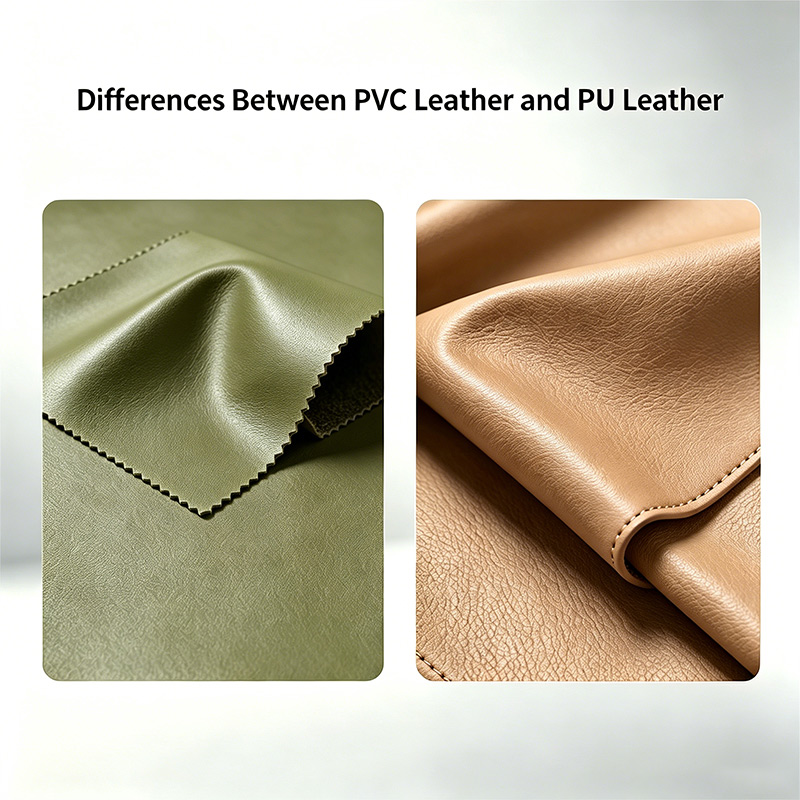
PU leather uses a non-woven or knitted fabric substrate coated with polyurethane resin. In leather handbag OEM workflows, we typically specify:
Dry-process PU: Direct resin coating. Firmer hand-feel, excellent for structured OEM leather handbags like briefcases, box satchels, and architectural mini-bags.
Wet-process PU: Coagulation immersion creates a microporous structure. Breathability and softness approach genuine leather—ideal for soft totes, slouchy hobo bags, and foldable travel accessories.
Manufacturing Note for Buyers: When you request Saffiano embossing or crocodile grain on a custom handbag order, PU retains surface texture far better than PVC. PVC tends to suffer from embossing reversion under heat-pressing, which can blur the pattern definition your brand requires.
PVC Leather (Polyvinyl Chloride) in Bag Manufacturing
PVC leather applies a woven fabric base coated with polyvinyl chloride resin. To achieve flexibility, plasticizers (phthalates) are added. While PVC is fully waterproof and highly abrasion-resistant, plasticizer migration is a long-term liability—particularly for buyers distributing in the EU and North America.
2. Technical Performance Data: The Numbers Behind Your Material Choice
Property
PU Leather
PVC Leather
Impact on OEM Leather Handbag Production
Hand Feel / Softness
Near-genuine; "meaty" rebound achievable
Plastic-like; stiffens below 10°C
Premium custom leather handbag lines require PU for perceived value
Weight (g/m²)
350–550
500–800
PU reduces shipping weight for large OEM handbag orders
Abrasion Resistance (Taber CS-17, 500g, 500 cycles)
0.8–1.2 mg loss
0.3–0.6 mg loss
Tool bags & industrial totes may use PVC
Flex Resistance (MIT fold, 20°C)
20,000–50,000 cycles
10,000–30,000 cycles
PU resists surface cracking in cold-climate markets
Peel Strength (N/3cm)
12–18
15–25
PVC coating adhesion is stronger; PU requires quality substrate control
Hydrolysis Resistance (70°C, 95% RH, 10 weeks)
Standard: 3–5 weeks; HR grade: 10+ weeks
Stable; does not hydrolyze
Tropical destinations (Southeast Asia, Latin America) require hydrolysis-resistant PU
Operating Temperature
-10°C to +60°C
-20°C to +70°C
PVC tolerates broader extremes but becomes brittle over time
Waterproofing
Water-resistant
Fully waterproof
Dry bags & marine accessories: PVC or TPU upgrade
3. Regulatory Compliance: Why Your Destination Market Dictates Material Choice
For OEM leather handbag brands exporting to regulated markets, material chemistry is not merely a tactile issue—it is a compliance gate.
Compliance Standard
PU Leather
PVC Leather
Sourcing Risk for Handbag OEM Buyers
U.S. CPSIA
Passes lead/phthalate limits
Lead stabilizer risk; phthalate limits apply
Children's OEM handbags & lunch totes face strict testing
California Prop 65
Low risk
Warning required if DINP/DEHP present
No safe harbor for listed phthalates
EU PPWR (2026+)
Recyclable TPU stream
Chlorinated polymer; poor recyclability
Circular-economy mandates favor non-PVC
VOC Emissions
Low
Higher (plasticizer off-gassing)
Indoor storage & retail display standards
Carbon Footprint (kg CO₂e/m²)
4.5–7.0
6.5–10.0
ESG reporting increasingly required by EU retailers
Synberry Production Note: When we produce custom leather handbag OEM orders for European, Australian, or North American clients, we default to PU unless the buyer explicitly requests PVC for a specific functional application. This protects your brand from downstream regulatory liability.
4. Application Matrix: Matching Material to Bag Category
Bag Category
Recommended Material
Thickness
Why This Choice?
Premium women's structured handbags
Wet-process PU
1.0–1.4 mm
Saffiano / Pebble embossing; luxury hand-feel
Business briefcases & work totes
Dry-process PU
1.2–1.6 mm
Structural rigidity; professional aesthetic
School backpacks & kids' bags
REACH-grade PU
0.8–1.2 mm
Mandatory CPSIA/EN 71 chemical safety
Travel duffels & foldable totes
Lightweight PU
0.6–0.9 mm
Airline weight restrictions
Promotional & event giveaway bags
PVC
0.5–0.8 mm
Cost-optimized; short lifecycle
Industrial tool bags & utility pouches
PVC
1.0–1.5 mm
Abrasion & puncture resistance
Waterproof outdoor bags
PVC or TPU
0.8–1.2 mm
TPU recommended for eco-positioned brands
5. How to Specify Materials in Your OEM Leather Handbag RFQ
One of the most effective ways to reduce sampling rounds by up to 60% is to eliminate material ambiguity in your initial inquiry. When contacting an OEM handbag manufacturer, avoid vague terms like "synthetic leather" or "faux leather."
Alternatively, please specify:
PU leather
Thickness: e.g., 1.0 mm
Surface finish: Saffiano, lychee grain, crocodile embossed, matte, glossy
Performance grade: Standard or hydrolysis-resistant (for humid markets)
Backing fabric: knitted or any other fabric (affects stitchability in OEM leather handbag assembly)
For PVC Leather Orders, Specify:
Plasticizer type: Request non-phthalate (DINCH) if market requires
Base fabric: Woven specification (affects tear strength)
Surface treatment: Matte, pearlized, or mirror glossy
Intended use: Promotional, industrial, or waterproof outdoor
6. The Sustainability Upgrade Path
For brands positioning above the standard OEM leather handbag tier, consider these advanced materials:
Material
Sustainability Profile
Hand Feel
Best Application
Water-based PU
No DMF solvent; low VOC
Excellent
Luxury vegan handbag lines
Silicone leather
Platinum-cured; extremely durable
Soft, silky
Medical-grade & premium travel
Recycled PU
Post-industrial waste stream
Comparable to virgin
ESG-compliant corporate collections
Bio-based PU (castor/corn oil)
Reduced petrochemical content
Good
Eco-conscious consumer brands
Conclusion:
In OEM handbag manufacturing, the PU vs. PVC decision is not simply a cost calculation. It is a strategic choice that affects regulatory compliance, brand perception, and product lifecycle. For buyers targeting EU, North American, and Australian retail channels, PU has become the de facto standard for OEM leather handbag collections; PVC's cost advantage is narrowing as environmental regulations tighten globally.
At Synberry, we bring 30+ years of production management experience to every custom leather handbag OEM project. We recommend confirming your material specifications during the technical review phase—before sampling—to avoid re-work costs and timeline delays.
Have a project brief? Send it over. We'll assess material fit, compliance gaps, and sampling scope—usually within 1~2 business day.
Author





 Network Supported