
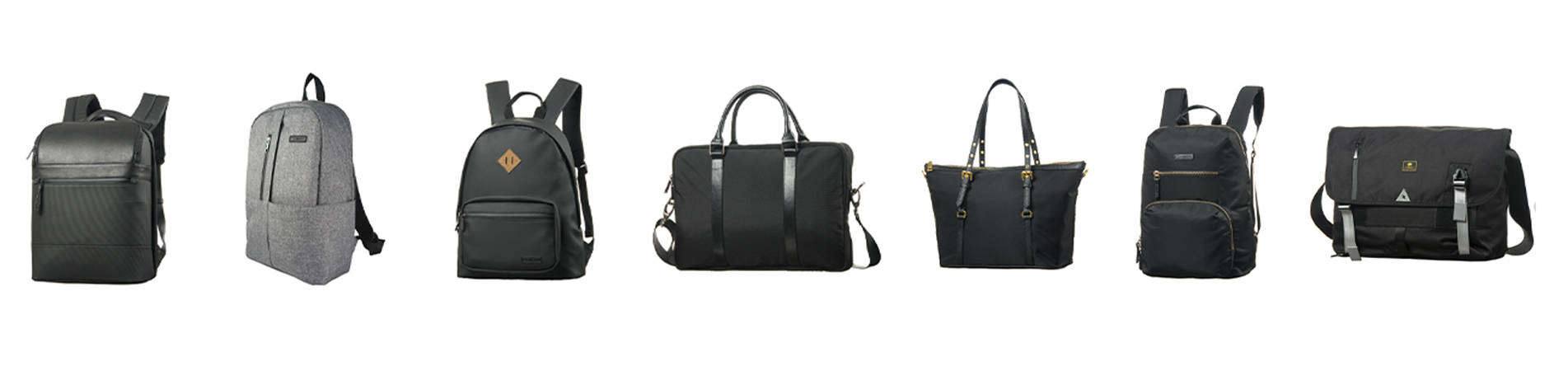
Opening a briefcase, unzipping a travel bag, and closing a cosmetics pouch, behind these everyday actions lies a vast and intricate zipper system. In the world of bags, zippers are far from being simple opening and closing tools, they play a crucial role in determining the product's functionality, security, aesthetic value, and even brand positioning. From high-end workshops to industrial production lines, the variety of zippers has become far more complex than the average consumer can imagine.
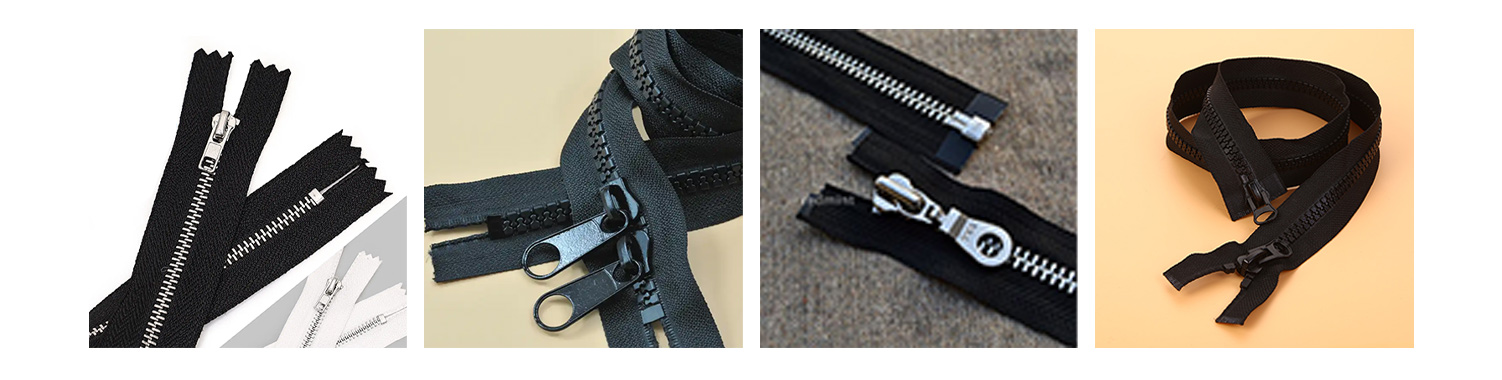
1. Single-end Closed Zipper: The most common and versatile type. One end is closed, while the other end is open. The zipper pull cannot detach from the teeth and only one pull moves back and forth between the two ends. When fully unzipped, it forms two "tails" but does not completely separate.
2. Double-end Closed Zipper: An upgraded version of the single-end closed zipper. Both ends are closed, and it features two zipper pulls. This allows for easy "opening from the middle to both ends" or "closing from both ends to the middle."
3. Single-end Open Zipper: The most classic and widely used "separable" design. One end is fixed, while the other end completely separates. It uses a single zipper pull and can only be opened or closed from one direction (from the fixed end to the separable end).
4. Double-end Open Zipper: This type can be opened or closed from both ends, either separately or simultaneously, and is equipped with two back-to-back installed zipper pulls. It doesn't have a traditional "top" or "bottom" end. The zipper pulls can meet or separate anywhere along the length of the zipper.
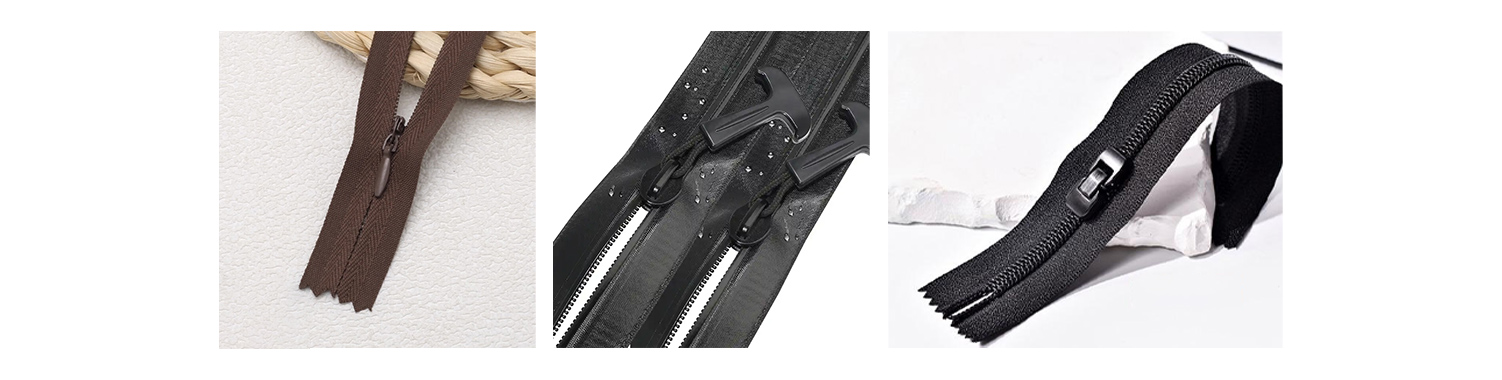
1. Invisible Zipper: Using a special weaving technique, the zipper teeth are hidden on the back of the fabric. When the zipper is closed, the teeth are almost invisible from the front, leaving only a narrow seam, creating an "invisible" effect. It is commonly used in women's handbags, cosmetic bags, high-end leather goods, and other products that prioritize aesthetic simplicity.
2. Waterproof Zipper: Utilizes lamination technology to bond a waterproof membrane (PU/PVC/TPU) to the zipper fabric, along with tight zipper teeth and TPE sealing strips on both sides of the fabric. After sewing, a triple-layer protection of "membrane-teeth-seal" is formed, ensuring waterproof functionality. This type is standard on outdoor cycling bags, hiking backpacks, and trekking bags.
3. Anti-theft Zipper: This type of zipper comes with a built-in locking mechanism. Once the zipper is closed, the zipper pull is locked in place by the lock. It is commonly found on high-end backpacks, camera bags, and other luggage that need to carry valuable items securely.
4. Child-proof Zipper: This zipper requires specific skills or greater force to open, effectively preventing children from accessing unsafe items. It is commonly found in diaper bags, medical kits, and similar products.
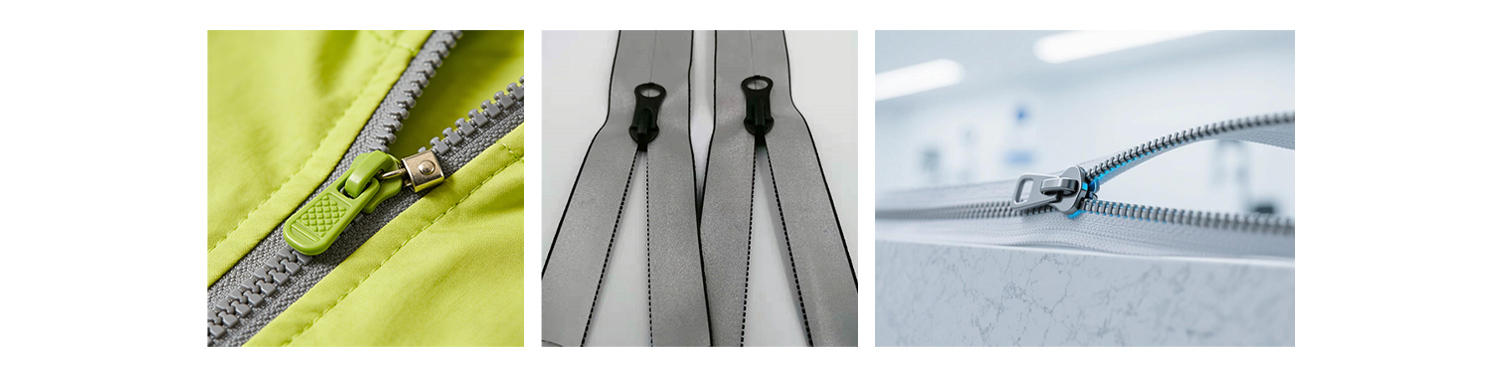
5. Reflective Zipper: This zipper incorporates retroreflective materials on the surface of the fabric or zipper teeth. When light shines on it, the zipper reflects most of the light back toward the light source, enhancing the user's visibility in low-light environments and ensuring personal safety. It is a highly practical zipper, mainly used in outdoor sports bags, hiking backpacks, and similar items.
6. Antibacterial Zipper: This functional zipper contains built-in antibacterial agents that effectively inhibit or kill the growth of bacteria, fungi, and other microorganisms on its surface. It is increasingly used in hospital emergency kits and outdoor hiking backpacks.
1. Metal Zipper: This is the classic aristocrat of the zipper world.
- Copper zippers have a rich, substantial texture and a warm luster. The oxidation marks that appear over time are cherished by vintage enthusiasts as a treasure. They are commonly found on high-end leather goods and military-style backpacks.
- Aluminum zippers are lighter and more modern, and can be electroplated to display a variety of vibrant colors. They are commonly found in fashion and casual bags.
- Black nickel zippers are highly durable, wear-resistant, and environmentally friendly. They are particularly favored in professional outdoor equipment.
2. Resin Zipper: The absolute powerhouse in today's market. Made primarily from polyester (POM), resin zippers offer endless color possibilities, strong plasticity, affordability, and corrosion resistance. From matte to glossy finishes, and from transparent to fluorescent colors, resin zippers perfectly cater to the demands of fast fashion and personalization. They are widely used in school backpacks.
3. Nylon Zipper: Made from polyester threads wound around a core, nylon zippers are soft, lightweight, and come in a wide range of colors. They have strong tensile strength and are highly flexible, making them the perfect match for soft travel bags and sports backpacks.
4. Mixed Material Zipper: The zipper teeth are made of metal, while the zipper pull is crafted from eco-friendly materials (recycled polyester or bio-based materials), responding to the wave of sustainability. Luxury and high-end brands have started experimenting with small batches of these zippers.
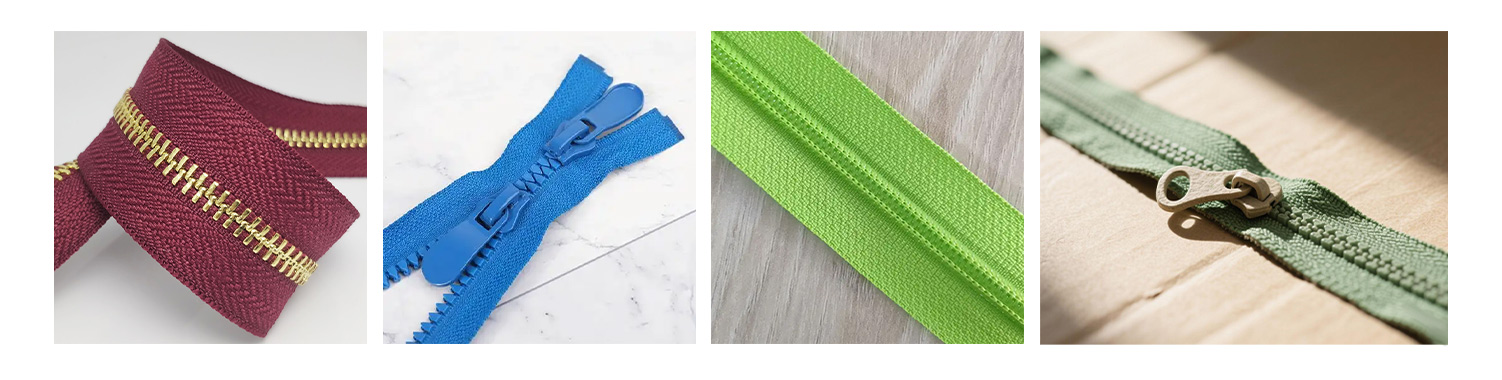
Ⅳ, Specification Dimension: The Larger the Number, the Thicker and Stronger the Zipper. Zippers in sizes 3#, 5#, 8#, and 10# are the most commonly used in the bag industry.
1. Fine Series: 3# ~ 5#, with a narrower zipper width of about 3 to 5 millimeters. It is delicate, lightweight, and soft, primarily used for inner pockets of handbags, wallets, and similar items.
2. Standard Series: 6# ~ 10#, with a moderate zipper width of about 6 to 10 millimeters. This is the most versatile specification, offering a balanced combination of strength and flexibility. It is commonly used in tote bags, storage boxes, and similar products.
3. Heavy-duty Series: 11# ~ 30#, with a larger zipper width of about 11 to 30 millimeters. These zippers are extremely sturdy and rugged, commonly found in large luggage, heavy-duty canvas bags, industrial machine bags, and similar items.
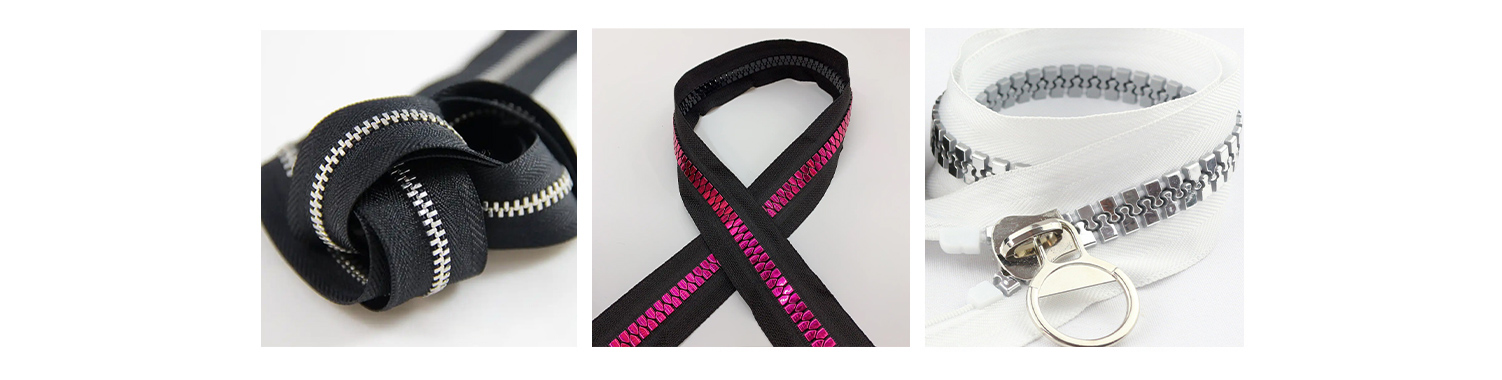
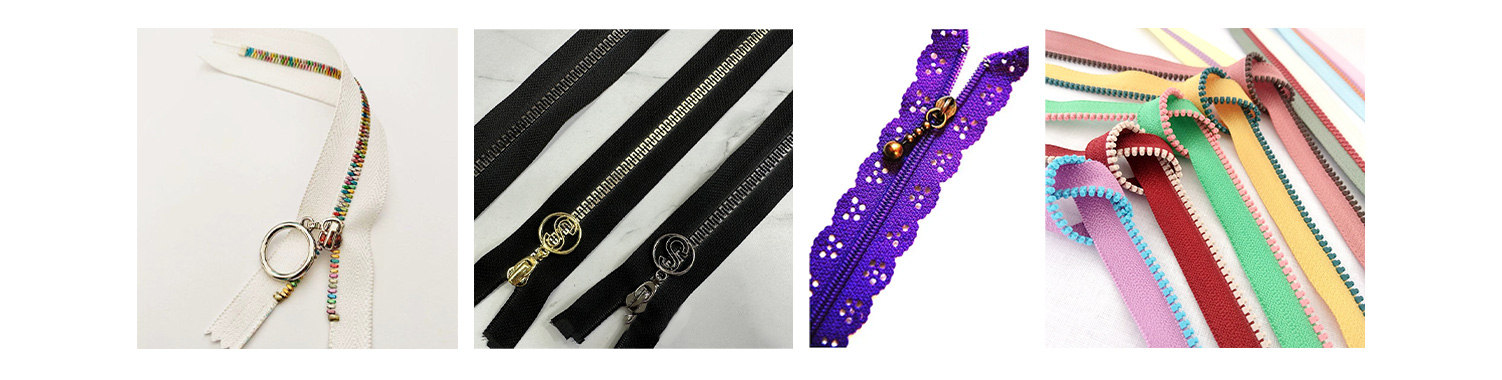
1. Dyed/Printed Zippers: These zippers undergo dyeing or printing treatments on the fabric or zipper teeth, offering a wide variety of patterns with a high degree of customization.
2. Foil-stamped Gold/Silver Zippers: Gold, silver, or colored foil is heat-pressed onto the surface of the fabric or zipper teeth, creating a metallic sheen that enhances the product's premium feel.
3. Rhinestone/Glue-drop Zippers: During post-processing, rhinestones are embedded along the zipper teeth or fabric edges, or glue is dropped onto the zipper teeth to create a three-dimensional pattern. These zippers focus primarily on decorative appeal.
4. Two-tone/Multicolor Zippers: Through post-processing techniques like section dyeing or localized spraying, these zippers display two or more colors on the fabric or zipper teeth, catering to personalized design needs.
1. Health Monitoring Zipper: The zipper teeth or pull integrates flexible sensors to monitor physiological data (such as heart rate, body temperature, and breathing) in real-time, syncing the information to a smartphone.
2. Display-integrated Zipper: A flexible screen is integrated with the zipper tape, displaying a list of items inside the bag.
3. Energy Harvesting Zipper: This zipper captures the micro-energy generated by its opening and closing motion, storing it to charge electronic devices.
4. Adaptive Zipper: A zipper made from memory alloy that adjusts its tooth spacing based on temperature, automatically regulating its tightness.

In the foreseeable future, zippers will continue to evolve from a "necessary component" into an "intelligent interface," ultimately becoming a bridge connecting bags to the digital world. This simple invention, born at the 1893 Chicago World's Fair, has found its broadest innovative stage in the bag industry, demonstrating that true transformation often begins with the smallest details. Every time you pull it, you are not just opening the space of a bag, but unlocking a microcosm that encapsulates a century of wisdom and endless possibilities.
| Author | ||||||
|
Please Read On, Stay Posted, Subscribe, And We Welcome You To Tell Us What You Think.




Copyright @2024 Synberry Bag & Package Products Co.,Ltd All Rights Reserved.
 Network Supported
Sitemap / Blog / Xml / Privacy Policy